
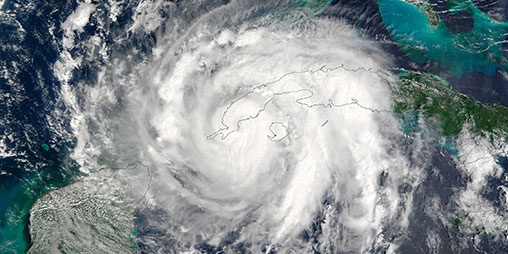
In an effort to establish consistent emergency preparedness requirements, increase patient safety, and ensure coordinated responses to catastrophes[i], the Centers for Medicare and Medicaid Services (CMS) released the Emergency Preparedness Requirements for Medicare and Medicaid Participating Providers and Suppliers (“Final Rule”) in September.
The Final Rule requires that participating providers and suppliers plan for natural and man-made disasters in collaboration with federal, state, tribal, regional, and local emergency preparedness organizations.[ii] Participating providers and suppliers must:
- Develop an Emergency Plan in light of an All-Hazards Risk Assessment
The plan must identify the capacities and capabilities critical for preparedness for the full spectrum of disasters identified in the risk assessment.
- Develop and Implement Policies and Procedures
Policies and procedures must support successful execution of the emergency plan in light of the risk assessment.
- Develop and Maintain a Communication Plan
The plan should ensure patient coordination within the facility, across health providers, and in collaboration with state and local emergency organizations and public health departments.
- Develop and Maintain Training and Testing Programs
Implement initial training for new and existing staff and annual refresher trainings that include, but are not limited to, drills and exercises to test emergency plans and identify gaps and areas for improvement. [iii]
Notably, the Final Rule sets unique requirements for each type of provider and supplier. CMS summarizes these requirements in a table.
Affected parties should review the Final Rule in depth, evaluating their current emergency preparedness plans and programs in light of the new obligations, implemented as Conditions of Participation beginning November 15, 2017.
---
[i] See https://www.cms.gov/newsroom/mediareleasedatabase/press-releases/2016-press-releases-items/2016-09-08.html
[ii] 81 FR 63860 Available at: https://www.gpo.gov/fdsys/pkg/FR-2016-09-16/pdf/2016-21404.pdf
[iii] 81 FR 63861 Available at: https://www.gpo.gov/fdsys/pkg/FR-2016-09-16/pdf/2016-21404.pdf
©2026 Carlton Fields, P.A. Carlton Fields practices law in California through Carlton Fields, LLP. Carlton Fields publications should not be construed as legal advice on any specific facts or circumstances. The contents are intended for general information and educational purposes only, and should not be relied on as if it were advice about a particular fact situation. The distribution of this publication is not intended to create, and receipt of it does not constitute, an attorney-client relationship with Carlton Fields. This publication may not be quoted or referred to in any other publication or proceeding without the prior written consent of the firm, to be given or withheld at our discretion. To request reprint permission for any of our publications, please use our Contact Us form via the link below. The views set forth herein are the personal views of the author and do not necessarily reflect those of the firm. This site may contain hypertext links to information created and maintained by other entities. Carlton Fields does not control or guarantee the accuracy or completeness of this outside information, nor is the inclusion of a link to be intended as an endorsement of those outside sites.

