
A trademark (one word) is the identity you give your products. A service mark (two words—don’t know why, just the way it is) is the identity you give your services. Trademarks and service marks are essentially treated the same way, so from now on let’s just call them trademarks. Effective IP protection requires an understanding of what these assets are.
Back to that identity. It’s how people are going to know that a particular product or service came from you and no one else. A trademark can be a word, a graphic design, a picture, a color, a sound, a character, even a smell. Or a combination of any of them. It’s just like your own name. That’s how other people identify you. You use a trademark to ensure they identify you with that product or service.
Examples of trademarks:
- APPLE – computers
- CHANEL NO. 5 – perfume
- COCA-COLA – soda
- ABSOLUT – vodka
- ROLEX – watches
Examples of service marks:
- JETBLUE – airline services
- HYATT – hotel and resort services
- OLIVE GARDEN — restaurants
- SUNTRUST – banking services
- HARVARD – education services
Logo vs. Trademark
A logo is a trademark. It’s a picture or drawing or character or something other than words alone that creates the association between you and your product.
It’s just another name for a trademark with a design component. Think of the Apple logo, GEICO lizard, Mickey Mouse, Mercedes star, and Fruit Loops. These are all logos and they are all trademarks. One and the same thing.

- APPLE LOGO – computers
- GEICO LIZARD – insurance services
- MICKEY MOUSE – coffee mugs
- MERCEDES BENZ LOGO – cars
- FROOT LOOPS LOGO – cereal
Speaking of Froot Loops, there’s a very funny and very true story about a series of lawsuits that were brought against Kellogg’s for false advertising because FROOT LOOPS has no fruit in it. A similar lawsuit was brought against the maker of Cap’n Crunch with Crunch Berries because the crunch berries had no fruit. None of the lawsuits made it very far, but imagine if they did and the products had to be taken off the market. Would the plaintiffs then be cereal killers?
OK, enough groaning, back to business.
Trade Dress
The way a product itself looks or is packaged can also be a trademark – that’s called trade dress. Whether it qualifies as trade dress, and thus as a trademark, depends on a few things.
First, the shape of the product or the packaging has to be something no one else in the industry needs to use for a similar type of product. In other words, it can’t be functional. And it has to be in use for a long enough time to develop sufficient public recognition aka “secondary meaning” or “acquired distinctiveness.”
For example, you can’t claim trademark rights in the rectangular paper box that most perfume products come in. BUT if you create a memorable design on that box and use it long enough – usually at least 5 years or so – without anyone else using the same design on their packaging, and you can show that all important “acquired distinctiveness” – there’s your trade dress. Or if you put the perfume itself in a bottle shape that no else uses and the shape of the bottle doesn’t serve any purpose other than to identify your product, there’s your trade dress.
Two perfect examples of both types of trade dress:
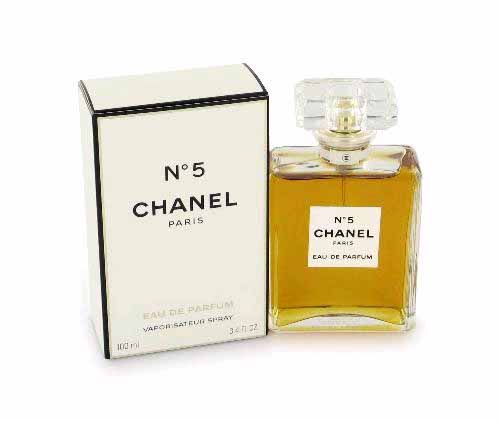
The perfume box itself is pretty common, but the overall look of the packaging – the white background with the black borders – is immediately identifiable as a Chanel perfume box. Similarly, the bottle itself is unique – and so iconic that Andy Warhol did a silkscreen of it in his series “Ads.” The bottle doesn’t need to have the trademark on it to be instantly recognized as the Chanel No. 5 bottle.
This article was originally published by I-Sight.com.
*Images above are the property of their respective trademark and/or copyright holders. They are used for identification purposes only.
©2026 Carlton Fields, P.A. Carlton Fields practices law in California through Carlton Fields, LLP. Carlton Fields publications should not be construed as legal advice on any specific facts or circumstances. The contents are intended for general information and educational purposes only, and should not be relied on as if it were advice about a particular fact situation. The distribution of this publication is not intended to create, and receipt of it does not constitute, an attorney-client relationship with Carlton Fields. This publication may not be quoted or referred to in any other publication or proceeding without the prior written consent of the firm, to be given or withheld at our discretion. To request reprint permission for any of our publications, please use our Contact Us form via the link below. The views set forth herein are the personal views of the author and do not necessarily reflect those of the firm. This site may contain hypertext links to information created and maintained by other entities. Carlton Fields does not control or guarantee the accuracy or completeness of this outside information, nor is the inclusion of a link to be intended as an endorsement of those outside sites.

