
Working in Two Mediums, NAIC Big Data and Artificial Intelligence Working Group Conceptualizes Tools for Regulators and AI Model Law
Since the Spring National Meeting, the National Association of Insurance Commissioners’ Big Data and Artificial Intelligence (H) Working Group has been conceptualizing new tools for regulators and exploring whether and to what extent a model law is needed to govern insurers’ use of artificial intelligence.
Regulatory Tools
The working group was tasked with sculpting tools that would enable regulators to identify and assess AI systems’ related risks in an efficient and standardized manner. It structured the tools into four questionnaires to supplement existing market conduct, product review, form filing, financial analysis, and financial examination review procedures.
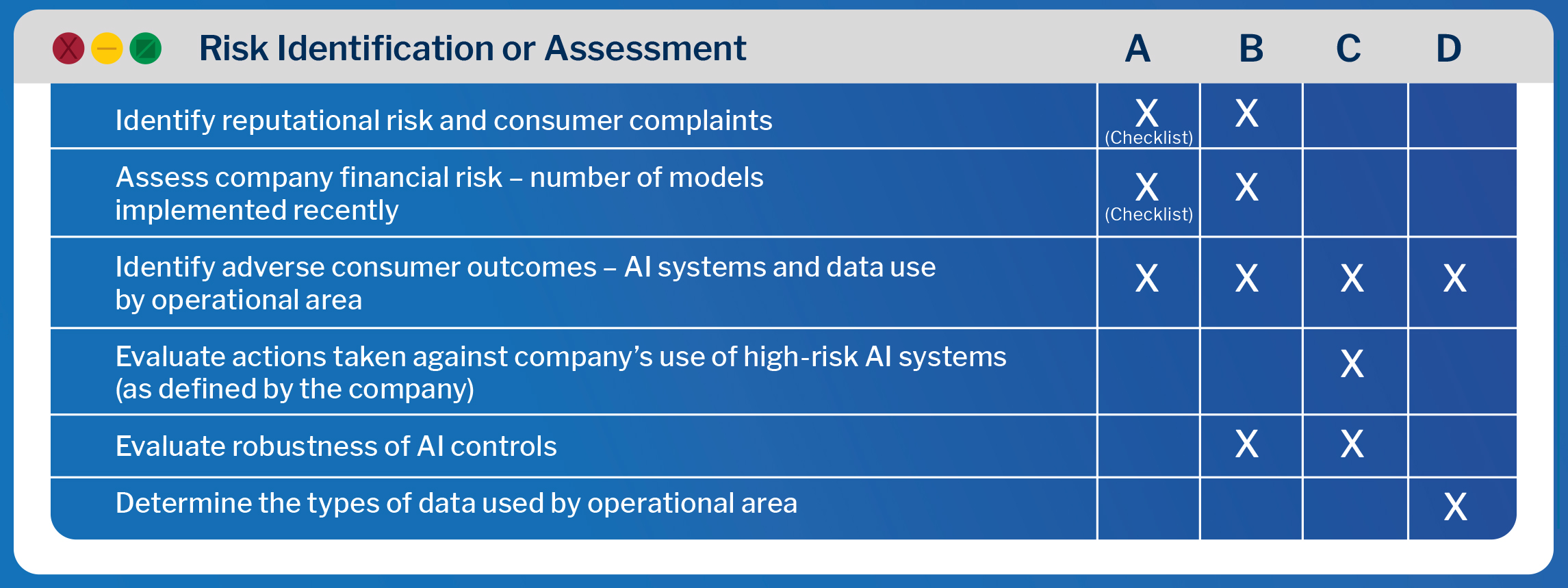
The group assembled questionnaires based on the type of risk identification or assessment being conducted:
- Exhibit A: Quantify Regulated Entity’s Use of AI Systems
The information gathered includes the number of AI system models in use and those with consumer impact and material financial impact; the number of models implemented in the last 12 months; the number of consumer complaints resulting from models; and the number of future AI system models planned. - Exhibit B: AI Systems Governance Risk Assessment Framework (Two Options: Narrative or Checklist)
The information gathered includes the insurer’s risk assessment and governance framework pertaining to the use of AI systems; use of AI systems that have financial, consumer, or risk control impacts; development, testing, and implementation of AI systems that differ from established IT protocols; use and oversight of AI system vendors; use of open-source AI; and development of AI in the next six months. - Exhibit C: AI Systems High-Risk Model Details
This exhibit gathers more detailed information on high-risk AI system models, such as those that make automated decisions or involve processes that could cause adverse consumer, financial, or financial reporting impacts. - Exhibit D: AI Systems Model Data Details
The information gathered includes the type of data used (external vs. internal) and how it is used by operational area; the type of AI models (predictive vs. generative); and the source of the data (internal and external, including vendor name).
To aid regulators and insurers, the working group explained which exhibit to use as follows:
The tool was released on July 7, with the public comment period ending on August 6.
Model AI Law
In determining whether and how to craft a model AI law, on May 15, the working group issued an eight-question request for information regarding an NAIC model law on the use of artificial intelligence in the insurance industry for a 25-day public comment period ending June 9, 2025.
Stakeholders differed on the need for a model law. Those who disagreed with the need for a model law urged that the AI model bulletin is the appropriate course for regulation. Those who asserted a model law is necessary believe that the existing laws and framework are insufficient to properly protect consumers because existing laws were not designed with an AI application in mind.
The stakeholders generally agreed that the work of the group should be guided by:
- The NAIC’s three-pillar framework of governance, transparency, and accountability
- A model should align with the broader NAIC regulatory structure
- A need to define when human decision-making should occur
- A risk-based, size-agnostic approach
- Flexibility
The National Council of Insurance Legislators (NCOIL) submitted comments that included a draft of its June 2025 model act regarding insurers’ use of AI. The model act would require a “qualified human professional” to make the final decision on all claims, require the insurer to maintain records of all actions taken by the qualified human professional, and require the insurer to explain to consumers that AI was used in the decision-making process.
Next Steps
At its August 12 meeting, the working group will continue to hear comments on the RFI with the goal of working toward a unified solution. Another meeting will be scheduled to review the comments on the regulatory tools.
This article was co-authored by Carlton Fields law clerk Jake Heiges.


The information on this website is presented as a service for our clients and Internet users and is not intended to be legal advice, nor should you consider it as such. Although we welcome your inquiries, please keep in mind that merely contacting us will not establish an attorney-client relationship between us. Consequently, you should not convey any confidential information to us until a formal attorney-client relationship has been established. Please remember that electronic correspondence on the internet is not secure and that you should not include sensitive or confidential information in messages. With that in mind, we look forward to hearing from you.