
Sellers Beware: Price Gouging Before, During, and After Hurricane Isaias Makes Landfall
In the run up to and aftermath of Hurricane Isaias, you may be considering raising prices for certain goods or services, such as ice, water, gas, lumber, rent, and lodging. In fact, many retailers often use algorithms to automatically increase prices as a response to increased demand, particularly hoteliers. Before you raise prices, or let your software raise them, it is important to understand Florida's price gouging statute and its exceptions during a state of emergency now that Governor DeSantis signed executive order (EO) 26-202 on Tuesday, October 6, 2026.
Retailers need to know that it is not that difficult to violate Florida’s price gouging statute, as its restrictions prevent grossly disparate price increases in certain goods, services, materials, merchandise, and other “commodities” including hotel rooms as defined in Florida Statutes section 501.160(1)(a).
Price restrictions are counterintuitive to most because a business owner is usually permitted to charge whatever a willing buyer will pay. But that’s not the rule once a state of emergency is declared, at least concerning certain commodities. The price increase restrictions come into play once Florida’s governor declares a state of emergency, such as what occurred during the COVID-19 pandemic. Similarly, in anticipation of Hurricane Isaias, Governor DeSantis issued an executive order declaring a state of emergency for the following counties: Baker, Bay, Calhoun, Columbia, Dixie, Escambia, Franklin, Gadsden, Gilchrist, Gulf, Hamilton, Holmes, Jackson, Jefferson, Lafayette, Leon, Liberty, Madison, Okaloosa, Santa Rosa, Suwannee, Taylor, Walton, Wakulla, and Washington Counties.
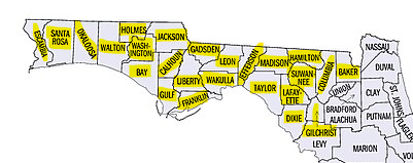
Simply put, once the governor declares a state of emergency in Florida, price gouging may occur when the amount charged for a commodity represents a gross disparity when compared to the average price at which that commodity or dwelling unit (hotel room) was offered during the 30 days before the declaration of the state of emergency. While some price increases are permitted, grossly disparate price increases are not. In fact, they can trigger a price gouging complaint (online or otherwise) and an inquiry by the Florida Attorney General’s Office. Unfortunately, Florida’s price gouging statute does not define what “gross disparity” means. And, even after looking at past Florida attorney general investigations and price gouging inquiries that resulted in enforcement actions and press releases about them, it is still difficult to distill any meaningful guidelines, particularly for the business owner who is not well-versed in Florida’s price gouging law.
As a result, we encourage business owners and vendors to consult with experienced counsel regarding what, if any, price increases are reasonable and unlikely to generate interest by the Florida Attorney General’s Office during the state of emergency, which expires 60 days from October 6, 2026, or on December 5, 2026. For more information about how to avoid a price gouging inquiry and scrutiny of your product pricing, or assistance with a price gouging inquiry, please contact the author of this article or a member of Carlton Fields’ White Collar and Government Investigations Practice.

The information on this website is presented as a service for our clients and Internet users and is not intended to be legal advice, nor should you consider it as such. Although we welcome your inquiries, please keep in mind that merely contacting us will not establish an attorney-client relationship between us. Consequently, you should not convey any confidential information to us until a formal attorney-client relationship has been established. Please remember that electronic correspondence on the internet is not secure and that you should not include sensitive or confidential information in messages. With that in mind, we look forward to hearing from you.